


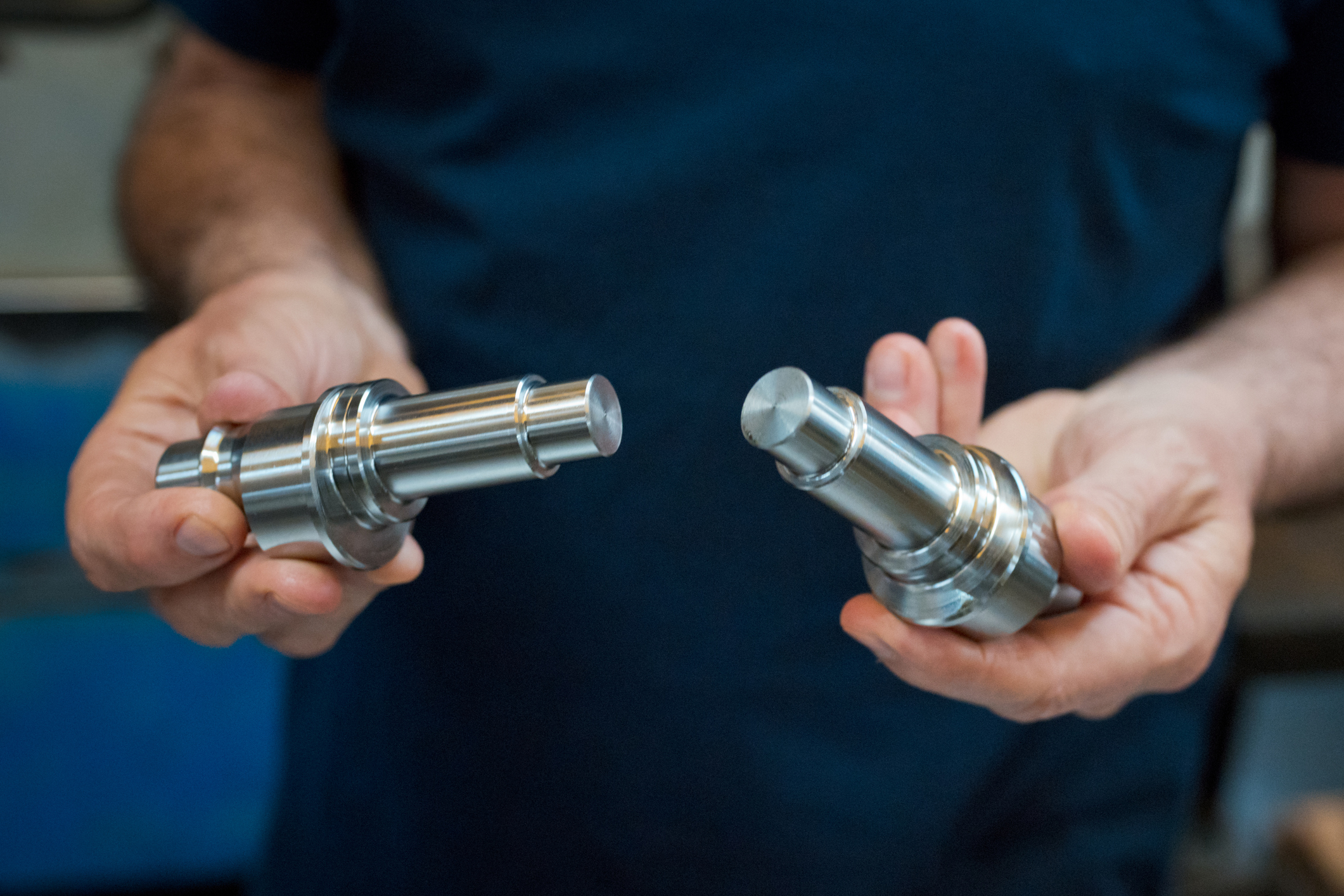
In the world of high precision manufacturing, a blueprint is more than just a set of instructions. It is a financial document. For engineers in all sectors, the decisions made during the initial R&D phase dictate the long-term viability and cost of a product. When you are designing components that require tight tolerance standards, the “how” of manufacturing is just as important as the “what” of the design.
At Lakeview Precision, we are obsessed with the details from initial communication to delivery of the final product. We often see designs that are functional on paper but unnecessarily expensive to produce in a real-world machine shop. By applying Design for Manufacturing (DFM) principles specifically for CNC Swiss turning, you can bridge the gap between a complex concept and a cost-effective reality. This proactive approach is the hallmark of a true investment partner rather than a mere vendor.
Understanding the Swiss Advantage in Design
To design effectively for a Swiss machine, you must first understand how it differs from a conventional lathe. In a standard CNC lathe, the workpiece is held in a chuck and rotated while the tool moves. In a Swiss-style machine, the material is fed through a guide bushing. The cutting tool remains close to this bushing, providing maximum support and virtually eliminating part deflection.
This unique mechanical setup allows us to manufacture long, thin, and intricate parts that would be impossible on other equipment. However, if a design does not account for the specific way a Swiss machine handles material, you may be leaving money on the table. Designing with the machine’s strengths in mind allows for faster cycle times and higher consistency across thousands of units.
The Power of the Guide Bushing
The guide bushing is the heart of the CNC Swiss turning process. Because the support is always right next to the cutting tool, we can maintain extreme precision over long lengths. When an engineer understands this, they can design parts with higher length-to-diameter ratios without fearing the vibration or “chatter” that plagues standard machining.
If your part is longer than three or four times its diameter, it is a prime candidate for the Swiss process. By optimizing the design to leverage this stability, you ensure a “Zero-Failure” outcome. You also avoid the need for secondary grinding or finishing operations that drive up the total cost of ownership.
Optimizing Geometry for Cost Reduction
One of the most impactful DFM strategies is the simplification of internal geometries. While CNC Swiss turning centers are incredibly capable, every minute of “cycle time” adds to the part cost. Engineers can often achieve the same functional result by making small adjustments to how a part is oriented or how internal features are specified.
For example, deep internal threads or square internal corners often require specialized tooling and slower feed rates. If a design can accommodate a small radius or a standard thread depth, the manufacturing speed increases significantly. We are invested in helping our clients identify these “low-hanging fruit” opportunities early in the design cycle.
Managing Tight Tolerance Requirements
Not every dimension on a part needs to be held to a ten-thousandth of an inch. Over-specifying tolerances is one of the leading causes of inflated manufacturing costs. In a DFM review, we look for areas where tolerances can be relaxed without affecting the part’s performance in the final assembly.
By focusing the tight tolerance requirements only on critical mating surfaces or functional zones, we can optimize the machining strategy. This allows us to use faster cutting speeds on non-critical features while maintaining obsessive focus on the details that actually matter for your application. This balance is what separates an experienced partner from a transactional shop.
Material Selection and Its Impact on Scalability
The material you choose has a profound impact on how a part behaves under the pressure of a cutting tool. High-temp alloys and stainless steels are common in medical and aerospace work, but they each present unique challenges. Some materials are “gummy” and prone to burrs, while others are brittle and can chip during high-speed operations.
When we perform a DFM analysis, we look at the interaction between the material and the part geometry. Sometimes, switching to a slightly different grade of the same alloy can result in much cleaner cuts and fewer rejected parts. This level of technical consulting helps you design a part that is not only better but cheaper to produce at scale.
Thermal Stability and Material Memory
In precision machining services, heat is a constant variable. Different materials expand and contract at different rates during the machining process. Our multi-axis machines are equipped with high-pressure coolant systems to manage this, but the design itself can also help.
Parts with very thin walls are particularly susceptible to thermal distortion. By designing for structural integrity during the machining phase, you ensure that the part remains stable as it is being cut. This prevents the “memory” of the metal from causing dimensions to drift once the part is removed from the machine.
The Financial Reality of Early Collaboration
Many procurement managers view machining as a commodity, but this perspective often leads to “rescue” scenarios where a low-cost vendor fails to deliver quality. The true value of an investment partner is found in the R&D phase. When you involve Lakeview Precision early, we can identify potential manufacturing bottlenecks before they become expensive delays.
This collaboration is especially vital for the “rescue” projects we often handle. When a previous shop has failed on quality or communication, it is often because they did not perform a proper DFM review. They attempted to force a difficult design through a standard process, resulting in failure. Our approach is to be relentless in our pursuit of the best manufacturing path from day one.
Building a Reliable Supply Chain
Reliability is not just about making a good part once; it is about making it ten thousand times without a single failure. Proper DFM ensures that the manufacturing process is “robust,” meaning it has a wide margin for error. A robust process is less likely to be affected by minor variations in raw material or tool wear.
By designing for manufacturing, you are essentially “buying” insurance for your supply chain. You are ensuring that your production line in Chicago or anywhere in the Midwest never stops due to a quality hold. This long term stability is a core part of the Engineering Support we provide to our clients.
Experience the Lakeview Precision Difference
Are you currently in the design phase for a complex component, or are you struggling with a vendor who cannot meet your specifications? We invite you to see what an investment partner looks like. At Lakeview Precision, we don’t just cut metal; we provide technical solutions that help your business grow.
Our team is ready to review your blueprints and offer the DFM insights needed to ensure a successful launch. We are a woman-owned, ISO-compliant shop dedicated to the highest levels of Precision Machining Services in the Midwest.
Contact Lakeview Precision today to start your DFM review:
Primary Phone: (847) 742-7170
Contact Page: https://www.lakeviewprecision.com/contact/
Key Takeaways for Your Next Design
- Leverage the Bushing: Design long, thin parts with the knowledge that Swiss turning eliminates deflection issues common in standard lathes.
- Simplify Geometries: Small changes to internal radii and thread depths can significantly reduce cycle times and overall costs.
- Target Your Tolerances: Only apply tight tolerance specifications to critical functional areas to keep production efficient.
- Select Materials Wisely: Choose alloys that balance functional needs with “machinability” to ensure a cleaner, faster production run.
- Partner Early: Engaging in DFM consulting during the R&D phase prevents costly “rescue” scenarios and supply chain failures later.